
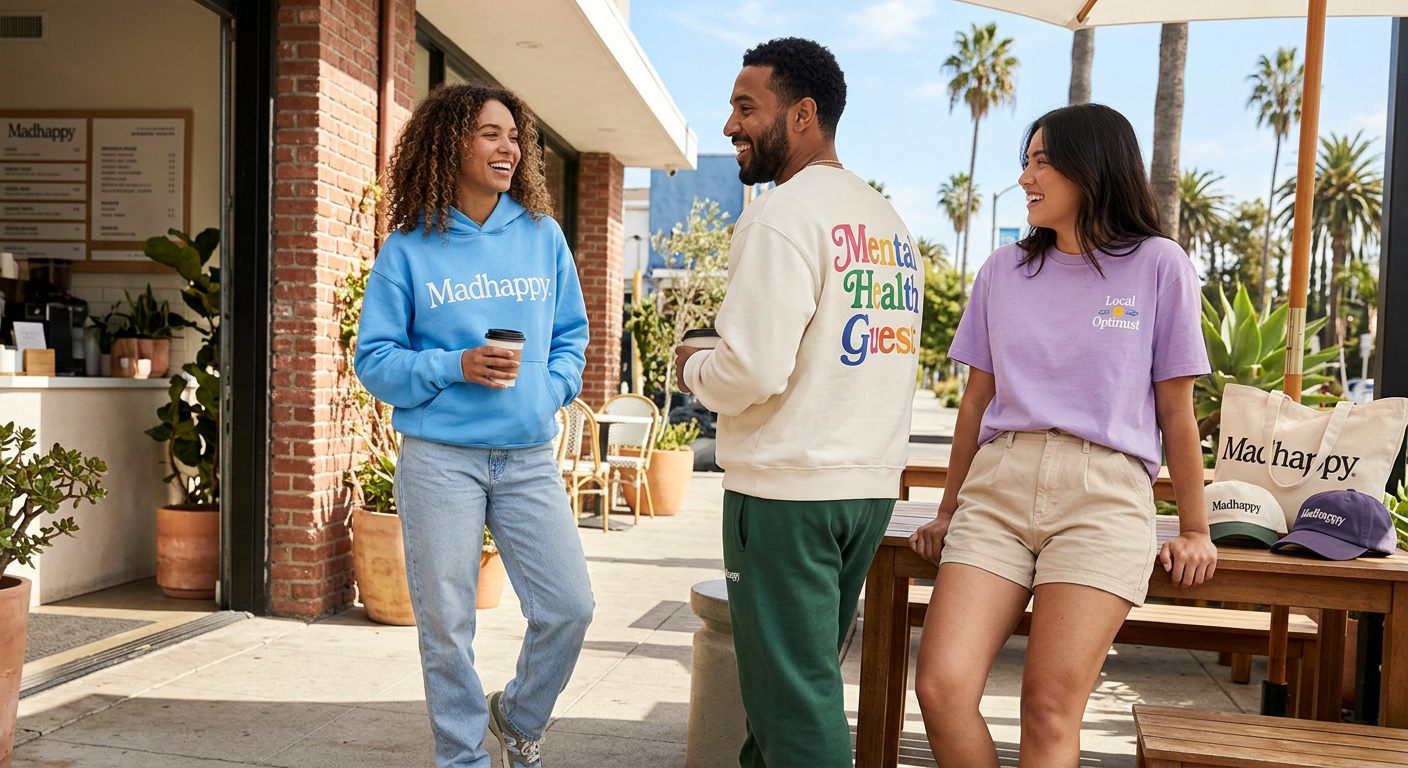
Madhappy Review: Premium Mental Health Streetwear With Real Flaws
When Madhappy launched in 2017, the brand hit a nerve. Four friends dealing with their own mental health struggles decided the fashion world needed more optimism and less cynicism. They started with hoodies in bold colors and a simple promise: wear something that makes you feel better. Six years later, Madhappy hoodies cost $150-$175, have million-strong cult followings on TikTok, and have spawned countless collaborations from Space Jam to Columbia.
But here’s the tension: Madhappy’s mission is genuinely thoughtful, its materials are genuinely thick and comfortable, and its community is genuinely supportive. Yet customer reviews reveal a pattern of quality control issues, color fading after washing, seams unraveling, and customer service that sometimes feels more about limiting losses than fixing problems. The brand works beautifully for some people and disappoints others spending the same money.
This Madhappy review breaks down what you’re actually buying: the real upsides, the honest problems, and whether the price reflects the actual product quality or the brand’s mission.
What Is Madhappy?
Madhappy is a Los Angeles-based streetwear brand that builds its identity around mental health advocacy as much as it builds hoodies. Founded by Joshua Sitt, Noah Raf, Peiman Raf, and Mason Spector, the brand positions itself at the intersection of premium casual wear and emotional wellness. Their signature products are colorful, oversized hoodies made from heavyweight fleece (typically 16 oz French terry cotton) with minimal branding and understated graphics. Most core pieces run $150-$200, with limited edition drops and collaborations sometimes exceeding $300.
Beyond the clothing itself, Madhappy operates The Madhappy Foundation (a 501(c)(3) nonprofit that contributes 1% of net sales to mental health initiatives) and runs The Local Optimist, a digital platform featuring podcasts, wellness hotlines, stories, and content centered on mental health conversations. The brand markets itself not as fashion for the sake of fashion, but as a tool for self-expression rooted in positivity.
Who Is This Actually For?
Madhappy works best for people who value both comfort and meaning in what they wear. If you want a hoodie that feels like an investment in your mental health journey, that you can wear repeatedly without feeling tired of it, and that signals to others you care about emotional wellness, Madhappy hits the mark. Fans describe their pieces as “favorite brand of all time,” with every purchase feeling intentional.
Madhappy also appeals strongly to younger demographics (Gen Z and younger millennials) and to people already interested in mental health conversations, wellness, and mindful living. The brand’s colorful aesthetic draws people who want streetwear that feels optimistic rather than edgy.
Who should skip Madhappy: If you need durability to match premium pricing, or if you’ve had bad experiences with color fading in fleece items, proceed with caution. If sizing inconsistencies frustrate you, or if slow customer service responses would bother you post-purchase, this may not be your brand. If you’re budget-conscious and can’t absorb a $150-$200 piece, there are excellent affordable alternatives. And if you want a brand fully committed to sustainability, Madhappy’s honest answer on their own FAQ is “not yet”.
What Real Users Love About It
The praise for Madhappy centers on a few concrete things. First, the material quality is real. Customers repeatedly cite the thickness and softness of the fleece, describing hoodies as dense, brushed-interior pieces that feel like an upgrade from typical streetwear. One customer noted their hoodie still feels “incredible” after extended wear, and many describe the fit as genuinely flattering in ways that surprise them.
Second, the mission matters to the community. Customers report feeling a genuine connection to the brand’s mental health advocacy. The Local Optimist platform, merchandise graphics featuring positive affirmations, and pop-up events with wellness activities create a sense that buying a Madhappy hoodie is participating in something larger than consumption. Several reviews note that wearing the brand itself feels like a small act of self-care or a visible statement of values.
Third, specific pieces perform well across reviews. The New York Optimism hoodie, Buddy blue colorways, and limited collaborations receive consistent praise for design, fit, and color vibrancy. Customers describe excitement about new drops and satisfaction with unique pieces not found in mainstream retail.
What to Know Before You Buy
Quality control is the most serious issue. Enough customers report hoodies coming apart at pocket seams after normal washing and wearing that this is not an isolated complaint. Color fading is another documented problem, with some buyers reporting significant discoloration after a few washes, despite the brand’s heavy fabric weight. These issues seem inconsistent across batches, which points to production variability rather than inherent material problems, but that’s cold comfort if you receive a defective piece.
Sizing is trickier than it should be. Because many pieces are unisex and designed with a relaxed, oversized fit, the difference between sizing up, down, or true size is genuinely confusing. While Madhappy provides fit guides on product pages, customers report receiving pieces that fit awkwardly, sometimes with an unflattering cinched waist or unexpected width. Reviews suggest trying things on if possible and carefully reading measurements before purchase.
Customer service is rigid and slow. The returns process, while technically allowing 30 days, involves a $12 return shipping fee that’s deducted from refunds (waived only for exchanges or store credit). Processing takes 7-14 business days after the return center receives items. More importantly, customers reporting defective items note that customer service offers limited recourse, often defaulting to a 10% discount on future purchases rather than promptly replacing faulty items. This approach leaves customers frustrated, especially at Madhappy’s price point.
Shipping timelines are inconsistent. While the brand estimates 3-7 business days for processing, some customers report waits of 2-3 weeks. This is worth factoring in if you’re purchasing around a specific date or season.
How It Compares to Top Competitors
Madhappy competes in the premium casual streetwear space alongside brands like Alo and Pangaia, though each plays a different game.
Madhappy vs. Alo: Alo leans into wellness as a design language, emphasizing technical, polished athleisure with a fitness angle. Alo’s pieces feel more tailored and performance-oriented, priced around the same range ($140-$200+), but without the explicit mental health mission. If you want your cozy wear to feel like athletic wear that’s been upgraded, Alo works. If you want emotional resonance alongside comfort, Madhappy is more intentional.
Madhappy vs. Pangaia: Pangaia positions itself as materials science disguised as clothing, famous for ultra-soft sweatshirts made from innovative sustainable fibers. Priced $100-$150, Pangaia’s pieces feature text blocks explaining their eco-friendly technology and minimalist aesthetics. Both brands appeal to socially conscious consumers, but where Madhappy emphasizes emotional wellness and optimism, Pangaia emphasizes environmental impact and innovation. Pangaia’s pieces tend to perform better in longevity tests, though they’re less about mental health specifically.
Against both competitors, Madhappy’s strength is its mission clarity. Its weakness is that the product doesn’t consistently back up the premium price in durability and quality control.
Is It Worth the Price?
This depends on what you’re paying for. If you’re paying purely for materials and durability, the quality control issues and fading complaints suggest Madhappy doesn’t consistently deliver at $150-$200. A comparable heavyweight hoodie from many brands costs less and sometimes lasts longer.
But if you’re paying for the experience, the community, the mental health mission, and the psychological lift of wearing something aligned with your values, the conversation changes. Customers who describe Madhappy as life-changing or as their favorite purchase are often factoring in emotional value, not just fabric weight. For them, it’s worth it.
The honest middle ground: Madhappy is worth $150 if you like the specific design, you prioritize the mission, and you’re comfortable with an elevated customer service risk. It’s less clearly worth it if you’re purely chasing durability or if quality control inconsistencies concern you. Wait for a collaboration or sale if possible, and if customer service has to be involved, expect patience.
Our Verdict
Madhappy delivers on its mission more reliably than it delivers on product consistency. The brand genuinely cares about mental health, genuinely sources quality materials, and genuinely creates hoodies that feel good to wear. But “quality materials” doesn’t guarantee “will last five years,” and committed mission doesn’t excuse quality control gaps. For people who value brand alignment and community alongside comfort, Madhappy is worth the investment with eyes open. For people purely seeking premium basics that won’t fade or fray, there are safer choices.
Frequently Asked Questions
Do Madhappy hoodies fade in the wash?
Some customers report significant color fading after washing, while others note their colors remain vibrant through multiple washes. This inconsistency suggests quality control variation across batches. Turning hoodies inside out before washing may help protect the print and outer fabric. If color fastness is essential to you, read specific product reviews before buying.
What size should I order in Madhappy?
Madhappy sizing varies by piece. Many items are unisex and designed with a relaxed, oversized fit, making it difficult to determine whether to size up, down, or stay true to size. Always check the product’s specific fit guide and measurement chart before ordering. For a fitted look, size down or stick to your true size. For layering comfort, size up. Measuring your chest width and body length and comparing to the size chart is more reliable than guessing.
How long does shipping take from Madhappy?
The brand estimates 3-7 business days for processing and shipping, with international orders taking 4-7 days after processing. However, some customers report waits of 2-3 weeks. If you need a hoodie by a specific date, order with buffer time or contact customer service to confirm current processing times.
What is Madhappy’s return policy?
Madhappy allows returns or exchanges within 30 days of purchase. Domestic refunds are subject to a $12 return shipping fee (deducted from your refund), though the fee is waived for exchanges or store credit. Allow 7-14 business days for processing after the west coast return center receives your items. International returns have separate policies.
Is Madhappy a sustainable brand?
Madhappy uses some sustainable materials like organic cotton and recycled polyester and commits 1% of sales to mental health causes through The Madhappy Foundation. However, the brand itself acknowledges on its FAQ that it is not fully sustainable yet, and aims to continue improving its practices. If environmental impact is your primary concern, Pangaia has a stronger sustainability focus.
What is The Local Optimist?
The Local Optimist is Madhappy’s digital content platform featuring a podcast, a mental health hotline, curated playlists, wellness toolkits, and interviews with mental health professionals. It’s free and accessible to anyone, not just Madhappy customers. The platform exists to extend the brand’s mental health mission beyond clothing.


