Baby Buddha Breast Pump Review: Powerful Suction That Divides Parents
The Baby Buddha has quietly become a cult favorite among breastfeeding mothers, and not always for the reasons you’d expect. This portable pump packs serious power into a device smaller than a smartphone, but that power comes with a significant catch: a suction strength that some mothers praise as game-changing and others describe as bordering on painful.
What makes the Baby Buddha review review interesting isn’t just that it works. Hundreds of breast pumps work. What matters is that mothers report cutting their pumping time from 25 minutes down to 10 or 12 minutes, which translates to freedom during the already demanding early months. But that speed comes at a price, and the Baby Buddha breast pump review needs to address both sides honestly.
This isn’t a pump for everyone. It’s specifically engineered for mothers who value portability, speed, and maximum output over comfort and gentleness. Whether that describes your situation depends on your individual body, your goals, and your pain tolerance.
What Is Baby Buddha?
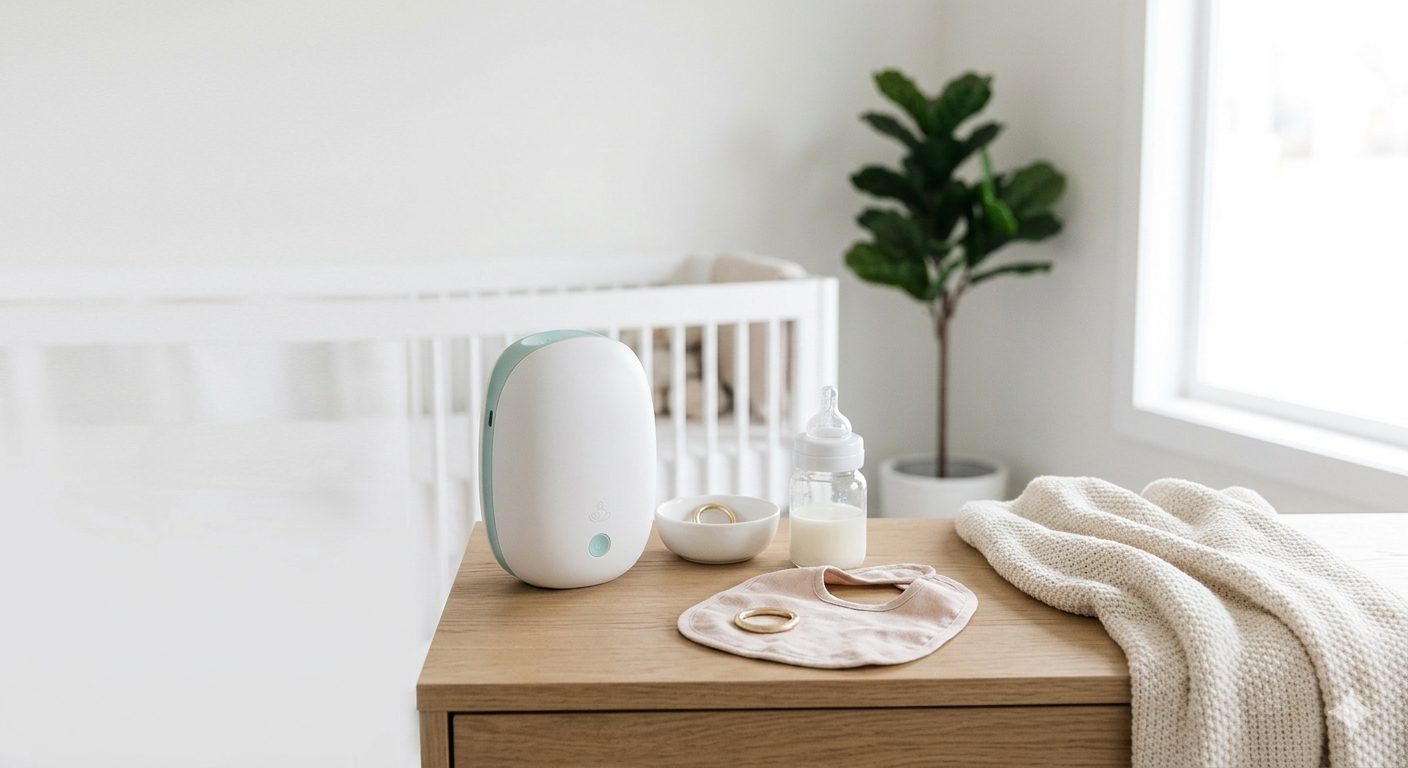
The Baby Buddha is a portable, wearable electric breast pump that weighs just 6.8 ounces and measures smaller than most smartphones. It’s designed to fit in a pumping bra, though unlike the Elvie Stride, it’s not actually discreet. You’ll know you’re wearing it, and anyone nearby will too. The Baby Buddha 2.0 is the current version, released in 2024, and includes new soft stimulation settings that weren’t available in the original model.
It retails for around $189 to $249.99 depending on the retailer and current promotions. The pump includes a closed system (milk never contacts the motor), rechargeable battery, and comes with multiple flange sizes. Most major insurance companies and Medicaid cover breast pumps, and the Baby Buddha frequently qualifies for free or heavily discounted coverage.
Who Is This Actually For?
The Baby Buddha breast pump review should be honest about its ideal customer: mothers who need to pump at work, who have time concerns, or who are dealing with low milk supply and need maximum output efficiency. If you’re returning to the office six weeks postpartum and need to pump three times a day between meetings, this pump reduces sessions from 25 minutes to 10-12 minutes. That matters.
Similarly, mothers with low supply often report success with the Baby Buddha precisely because of its aggressive suction pattern. The pump is strong enough to work as a primary pump, not just a supplementary one, which is unusual for portable models.
Skip the Baby Buddha breast pump review if: you’re exclusively pumping as a newborn and introducing the bottle later (gentler is better), your nipples are already sensitive or damaged, or you’re looking for a discreet option you can use during calls or public settings. The noise level is moderate, not library-quiet, and the pump is clearly visible on your chest.
What Real Users Love About It
Speed is the overwhelming winner in Baby Buddha review comments. Mothers consistently report that sessions take half the time compared to other pumps. In a Spectra S1 Plus, the current efficiency leader for corded pumps, you might get 5.5 ounces in 10 minutes. The Baby Buddha achieves similar output, but portably. That advantage compounds three times a day, five days a week.
The second major praise point is suction strength and output consistency. Mothers with low supply report that the Baby Buddha delivered more milk per session than larger, more expensive pumps they’d owned. Reviews mention “strong pulls” and “long, powerful drains” as the mechanism that makes the difference. This is a pump that doesn’t give up early; it keeps working.
Mothers also appreciate the closed system design. With a closed system, milk never flows backward into the pump mechanism, which means there’s no risk of mold or bacterial growth in the pump itself. Combined with the 2-year limited warranty (industry standard is one year), the Baby Buddha feels like an investment that will last.
The new soft stimulation mode in the 2.0 version addressed one major complaint about the original model. The original pump had one stimulation setting that some users found too intense from the moment they turned it on. The 2.0 adds softer stimulation options that feel more like standard pump settings, which matters if you have sensitive nipples or want a gentler initial phase.
What to Know Before You Buy
The suction strength that mothers praise is the exact thing that causes problems for others. The Baby Buddha breast pump review has to acknowledge that some mothers experienced nipple soreness or pain during the first few days, even at low settings. The pump manual explicitly warns about potential injury if suction levels are too high for your body. This isn’t a defect; it’s by design. The pump is aggressive, and that’s intentional.
The adjustment period is real. Most mothers report that after a day or two, their bodies adapted and the discomfort disappeared. But for some, the suction remained too intense even at the lowest settings. You need to know your own pain tolerance before committing. The 60-day return policy helps mitigate this risk, but you still have to experience the discomfort first.
Battery life is another constraint. The Baby Buddha 2.0 battery lasts approximately four pumping sessions, or roughly one hour of total use. If you pump 15-minute sessions three times daily, you’re charging the pump every day or every other day. The USB charging is convenient (any standard phone charger works), but it’s a management step that tethered pumps don’t require.
Flange sizes begin at 21mm, which is actually smaller than many pumps, but still larger than what some mothers need. If you have particularly small nipples, you may need to purchase aftermarket flange inserts or smaller Maymom flanges, which adds to the cost. The standard configuration includes 24mm flanges, which fits most but not all mothers.
Finally, the pump is noticeably loud. It’s not a Spectra S1 Plus (which is almost silent). If you’re pumping in a shared office or quiet environment, the Baby Buddha makes its presence known. This is a minor complaint in the grand scheme, but worth acknowledging if discretion matters to you.
How It Compares to Top Competitors
Against the Spectra S1 Plus: The S1 Plus is a corded pump that stays on your desk or nightstand. It’s quieter, more customizable (12 suction levels versus the Baby Buddha’s 21 settings), and highly efficient. Where the Baby Buddha wins is portability and battery independence. The S1 Plus requires an outlet. The S1 Plus also costs more, though insurance often covers the full price. For speed, both are roughly equivalent at extracting milk. For comfort and quiet operation, the S1 Plus wins. For portability at work or while traveling, the Baby Buddha is the clear choice. Most mothers choose between these two based on whether they need portability or prefer staying in one place while pumping.
Against the Elvie Stride: The Stride is the most discreet wearable pump on the market. You can wear it completely hidden inside your bra during a meeting or phone call. The Baby Buddha breast pump review needs to acknowledge that this is a real advantage if you need to pump in professional settings. However, the Elvie Stride is less efficient than the Baby Buddha (mothers report less output per session), noisier than advertised in real-world conditions, and costs $269 to $349.99. The Stride is for mothers who absolutely need discretion. The Baby Buddha is for mothers who need power and efficiency and don’t mind being visible while pumping.
Against Medela Pump in Style with Max Flow: Medela is the most widely available pump and often fully covered by insurance. However, reviewers note that it lacks a display screen, so you can’t see what setting you’re using or how long you’ve been pumping. The Baby Buddha has clearer feedback and faster session times. Medela is the safe choice; the Baby Buddha is the efficient choice.
Is It Worth the Price?
At $189 to $249.99 (and often obtainable free through insurance), the Baby Buddha is reasonably priced. For mothers who will pump 750-1000 times over six months of exclusive pumping, reducing session time from 25 minutes to 12 minutes saves roughly 200 hours. That alone justifies the purchase. The 2-year warranty, closed system design, and portability add additional value. If you need a pump for 6-12 months of working motherhood, this is one of the best values on the market. If you’re ambivalent about pumping or only need occasional sessions, a less aggressive pump might be sufficient.
Our Verdict
The Baby Buddha is a powerful, efficient, portable breast pump that genuinely cuts pumping time and works well for mothers with low supply or strict time constraints. The strong suction isn’t a flaw, it’s the core technology. You’re buying this pump specifically for its aggressive extraction power. The trade-off is adjusting to intense suction, managing battery charging, and accepting that it’s visible rather than discreet. For working mothers and those dealing with supply concerns, it’s a legitimate game-changer. For mothers with sensitive nipples or those seeking a gentler pump, other options exist.
Frequently Asked Questions
Does insurance cover the Baby Buddha?
Most major insurance companies and Medicaid cover breast pumps. The Baby Buddha frequently qualifies for free or heavily discounted coverage. You can check coverage through Aeroflow or your insurance’s DME (durable medical equipment) coordinator. Some mothers receive it free, others pay $50-100 as an insurance upgrade. It’s worth checking before buying.
Can I use the Baby Buddha as my only pump?
Yes. The Baby Buddha is designated as a primary pump, not a supplementary one. Unlike many portable pumps, it has enough suction power and session flexibility to be your only pump if you’re exclusively pumping or exclusively pumping at work. Many mothers use it as their only pump during the working day.
Is the soft stimulation mode in the 2.0 worth upgrading from the original?
If you have sensitive nipples or found the original too intense, the soft mode in the 2.0 is the improvement you’ve been waiting for. If you already own an original and aren’t experiencing pain, upgrading isn’t necessary. If you’re buying new, the 2.0 is the only version you should consider due to the added flexibility.
How do I handle the strong suction during the first few days?
Start at the lowest suction settings and increase gradually. Most mothers’ bodies adapt within 1-3 days. Some recommend using nipple cream or expressed breast milk as lubrication. If pain persists beyond a week at low settings, this pump may not be right for your body, and the 60-day return policy protects you.
What’s the real battery life in daily use?
The pump lasts approximately 4 pumping sessions per charge. If you pump 15-minute sessions, that’s about one hour of total pumping time. Most mothers charge it nightly or every other evening. The USB charging is fast (30-60 minutes to full), and you can use any standard phone charger, so it’s more convenient than carrying a proprietary cable.
Can I buy smaller flanges that fit better?
Yes. The Baby Buddha is compatible with third-party flanges, including Maymom inserts and smaller sizes. Many mothers size down from 21mm to 19mm or 17mm using compatible flanges. This adds cost (typically $15-30), but is worth the investment if standard sizes cause discomfort or reduce efficiency.