
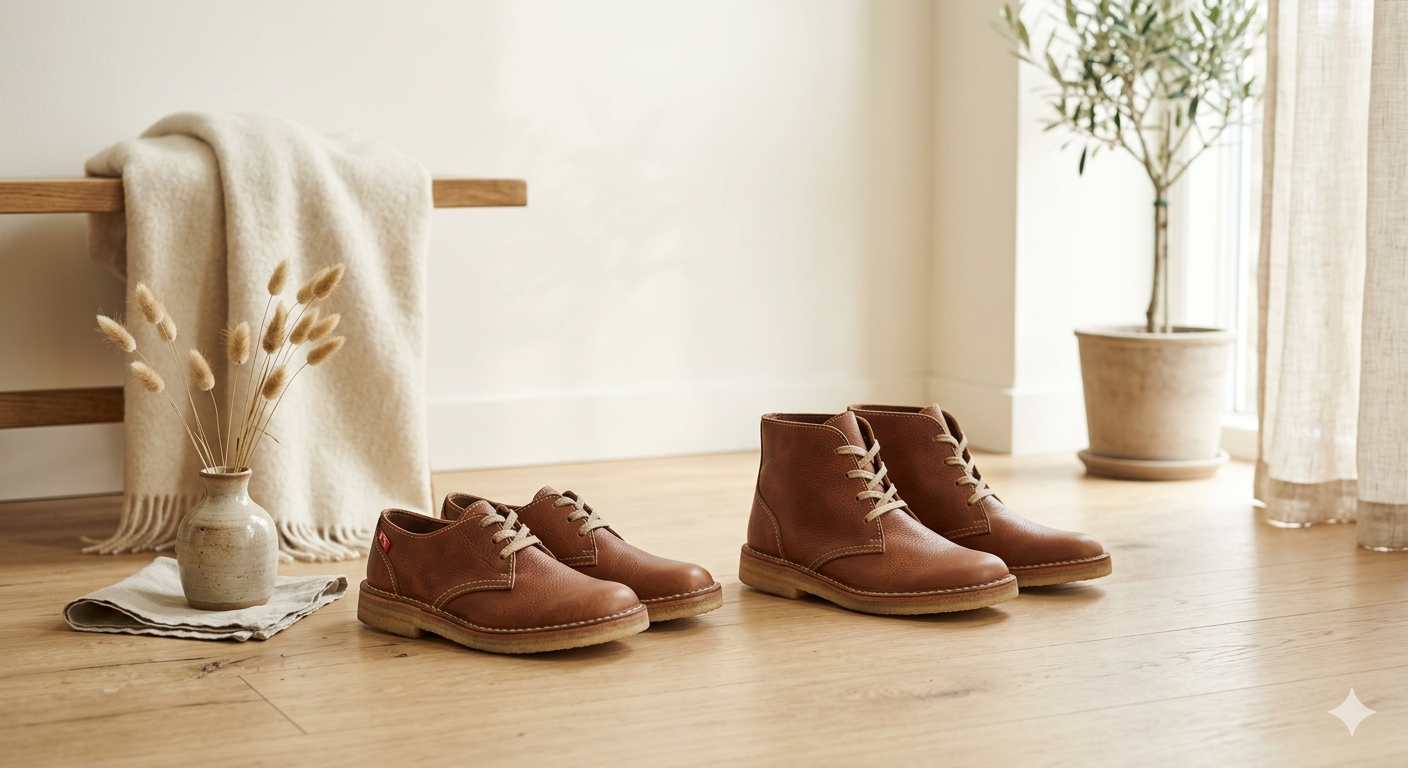
Duckfeet USA Review: Minimalist Danish Boots That Feel Like Coming Home
There’s something refreshing about a brand that hasn’t chased trends for 50 years. Duckfeet, the Danish shoemaker, makes a simple and deliberate choice: wide-toe leather boots designed to let your foot be your foot. No excessive arch supports. No promises of biomechanical miracles. Just vegetable-tanned leather, natural crepe rubber soles, and room to move.
This approach polarizes people. Fans describe their Duckfeet as shoes they forget about because they’re too comfortable to notice. Critics complain about stiffness on arrival, customer service delays, and an almost ascetic minimalism that feels out of step with modern shoe engineering. One reviewer with wide feet, excited by the brand’s reputation, returned a pair of Ringkobing sandals because they felt too narrow. The Duckfeet review you read online might be your story or its opposite.
We’ve researched Reddit threads, Trustpilot feedback, blog reviews from long-term wearers, and real customer complaints to cut through the mythology around Duckfeet. Here’s what you actually need to know before you spend $330-$350 on a pair of Danish leather boots.
What Is Duckfeet USA?
Duckfeet is a Danish footwear brand founded in 1975 by Inga and Claus Wiechmann in southern Denmark. Every shoe is handcrafted in Europe using premium full-grain leather (2.5mm thick), vegetable-tanned and certified by Oeko-Tex and Terracare standards. The signature sole is natural rubber crepe (the same material used in professional chefs’ clogs), soft and flexible enough to mold to your foot but durable enough to be resoled multiple times.
The brand’s design philosophy is rooted in mid-century Danish minimalism: simplicity, honesty, functionality. Their shoes are intentionally foot-shaped with a wide toe box and moderate heel. Most Duckfeet retail between $330 and $350 per pair. The main styles are boots like the Arhus (insulated wool-lined winter boot), slip-ons like the Faborg, and sandals like the Ringkobing. All are unisex and available in multiple widths and colors.
Who Is This Actually For?
Duckfeet are ideal if you have: Wide feet, a high instep, or toes that splay naturally under weight. You prefer minimal, natural-shaped shoes over rigid orthopedic support. You value longevity and are willing to care for leather. You appreciate European craftsmanship and sustainable materials. You don’t mind a stiff break-in period of 5-10 wears. You live somewhere cold (for the Arhus) or want a versatile slip-on for casual wear. You’re comfortable buying from a small company with spotty customer service if the product justifies it.
Duckfeet are not for you if: You need significant arch support or orthotic insoles as your primary solution. You have a narrow heel with a wide forefoot and require heel grip (though the Arhus does have a tapered heel). You expect fast customer service, easy returns, or responsive support channels. You want immediate comfort out of the box without a break-in period. You prefer brands with extensive retail presence or easy return policies. You have narrow feet overall. You’re shopping on a tight budget.
What Real Users Love About Duckfeet
The most consistent praise centers on long-term comfort. Reviewers report that after an initial stiff phase, the leather softens and molds to the exact contours of your feet. One long-time user described it as “shoes that feel like they’ve been mine for years after six months of wear.” The crepe sole is universally praised for being soft underfoot while remaining durable enough for daily use.
For wide feet, the toe box is genuinely spacious. Unlike many “wide” shoes that just add width in the arch, Duckfeet provide real room in the ball of the foot and toes, allowing natural toe splay. Reviewers with duck-shaped feet (broader forefoot, narrower heel) report that Duckfeet finally fit without slipping or pinching. One reviewer noted the Arhus “feels like a shearling-lined slipper you can actually walk in.”
The durability story is compelling. Multiple reviewers mention wearing the same pair for 3-5 years, with a Duckfeet employee citing his oldest continually worn pair as three and a half years old and resoled twice. The sole can be replaced (an important feature), and with proper care, the uppers last through multiple resoles. Duckfeet also develop a natural patina that many users find attractive.
The aesthetic appeal shouldn’t be underestimated. These are quietly handsome, neutral-colored boots that pair with casual and semi-formal wear. No chunky branding, no fashion trend dating. They look like shoes that existed in 1975 and will exist in 2030.
What to Know Before You Buy
The break-in is real and can be painful: Fresh Duckfeet leather is genuinely stiff. Multiple reviewers report blisters on the first 5-10 wears, particularly on the sides and top of the foot. Some describe it as “unbelievably tough leather.” The upside is that the stiffness comes from quality (not bad construction), and once it softens (typically after 10-15 wears for most wearers), it doesn’t harden again.
There’s no arch support: The leather footbed is flat and foot-shaped. If you require significant arch support, Duckfeet won’t be your answer. Some users add custom insoles, though this may require sizing up by half a size. The expectation is that your own arch does the work, which appeals to barefoot-shoe enthusiasts but not to those with plantar fasciitis or fallen arches.
Customer service is a real weakness: Multiple Trustpilot and customer reviews describe AI-generated responses, delayed refunds taking 30 days or more, unexplained restocking fee deductions, and a company that appears understaffed. One reviewer noted they had to email four times to get a refund processed. The returns policy shows only two customer service staff members, explaining the bottleneck. International orders have a 90-day return window, but US orders are 21 days. Returns cost $12 to ship (or $20 from Canada). Be very certain of your size and fit before ordering.
Fit is inconsistent across models: The Arhus boot is genuinely wide and comfortable for most wide-foot wearers. The Ringkobing sandals, despite being marketed as medium-to-wide, received complaints from people with wide feet saying they felt too narrow. Reviews suggest trying on in person if possible, or being very clear with Duckfeet about your foot width before purchasing a specific model.
The leather requires maintenance: Duckfeet recommend regular cleaning and conditioning to maintain the leather and extend the shoe’s life. Without care, they will deteriorate faster. This is typical of quality leather goods but worth knowing upfront.
How It Compares to Top Competitors
Duckfeet vs. Birkenstock: Birkenstock offers rigid orthopedic support with a built-in arch and footbed designed for structured support. Duckfeet offer a flat, moldable leather footbed with no internal arch support. Birkenstocks are stiffer and more supportive for people who need it. Duckfeet are softer and more minimalist, designed to let your foot move naturally. Birkenstocks have an easier break-in. One Birkenstock fan who switched to Duckfeet stated they preferred Duckfeet for everyday comfort once broken in. Cost is similar (both $300+).
Duckfeet vs. Barefoot Shoes (Xero, Vivobarefoot, etc.): Barefoot brands offer zero-drop, minimal design but typically use synthetic materials and are lighter weight. Duckfeet use premium leather and crepe rubber and have a moderate heel (not zero-drop). Barefoot shoes are generally cheaper ($100-200) and have easier break-ins. Duckfeet feel more finished and formal, while barefoot shoes lean athletic or casual. If you want barefoot philosophy in a leather dress-up shoe, Duckfeet is your answer. If you want barefoot shoes under $200, look elsewhere.
Duckfeet vs. Other Wide-Toe Brands: Brands like Camper, Rieker, and Chaco offer wide-toe options but include arch support (which Duckfeet doesn’t). They’re often easier to break in and more widely available at retail. Duckfeet differentiate on handcrafted quality, resoleability, and European sustainability focus. You’re paying a premium for artisanal production and longevity, not advanced support technology.
Is It Worth the Price?
The $330-350 price point is high, but defensible if you wear the shoes for 3+ years (which multiple reviews confirm is realistic). That’s roughly $100-110 per year for a daily-wear shoe. If you resolve the sole (typically $80-120), you extend the life another 2-3 years. Long-term cost-per-wear drops significantly compared to $100-150 shoes that last one to two years.
The value also depends on your needs. If you have wide feet and have struggled to find comfortable shoes, Duckfeet represent a solution that actually addresses the problem (wide toe box, natural shape) rather than a marketing promise. If you have normal or narrow feet, or if you need arch support, the price advantage disappears because you’re paying for features you won’t use.
The sustainability angle (vegetable-tanned leather, European production, resoleability) has value if that matters to you. If you buy primarily on price, brands like Clarks or New Balance wide-fit options will seem cheaper upfront.
Our Verdict
Duckfeet USA delivers on its core promise: handcrafted, wide-toe leather boots that become more comfortable with age. If you have genuinely wide feet, value durability, and are willing to weather a stiff break-in period and potentially difficult customer service, they’re worth the investment. The weak link is customer service (returns are slow and frustrating), so be certain of your size and fit before ordering. For wide-foot enthusiasts, Duckfeet are a genuine alternative to conventional brands. For everyone else, they’re a niche product that only solves specific problems.
Frequently Asked Questions
How long does the break-in period take?
Most reviewers report 5-15 wears before the leather softens significantly. Some experience blisters early on, particularly on the sides and top of the foot. Once the leather softens, the shoes don’t harden again and continue to mold to your foot for 6-12 months. This is longer than typical shoes, so plan accordingly.
Can I add orthotic insoles to Duckfeet?
Yes, but sizing becomes tricky. If you need insoles, Duckfeet recommends sizing up by half a size to accommodate the extra thickness. This may affect the fit elsewhere. The flat leather footbed is intentionally designed to let your arch work naturally, so insoles defeat some of the design philosophy.
How long do Duckfeet actually last?
With proper care, reviewers report 3-5 years of regular wear. The sole can be resoled (an important feature), extending the life another 2-3 years. One Duckfeet employee’s oldest pair is 3.5 years old and has been resoled twice. Durability depends heavily on maintenance and climate (harsh winters and salt accelerate wear).
Are Duckfeet worth the $330+ price?
If you wear them daily for 3 years, the cost-per-wear (~$110/year) is reasonable for a handcrafted shoe. If you only wear them casually or replace them annually anyway, the price premium is harder to justify. They’re an investment in durability and fit quality, not a bargain purchase.
What’s the biggest complaint about Duckfeet?
Customer service and returns. Multiple reviewers report slow refund processing (30+ days), AI-generated responses, and unexplained restocking fees. Be absolutely certain of your size and fit before ordering, as the return process is frustrating. The international (Danish) Duckfeet site has faster service than the US site.
Do Duckfeet work for people with narrow feet?
Not well. The entire design philosophy centers on accommodating wide feet. People with narrow feet report excess width in the mid-foot and arch, requiring thick socks or custom insoles to get a secure fit. Stick with brands designed for standard widths.


