Mauviel 1830 Review: Is French Copper Cookware Worth the Splurge?
Here’s the tension at the center of every Mauviel 1830 review worth reading: this is genuinely some of the most responsive cookware you can put on a stove, and it’s also a brand that changed its most popular line in a way that quietly annoyed its most devoted fans. Both things are true at once, and neither cancels the other out.
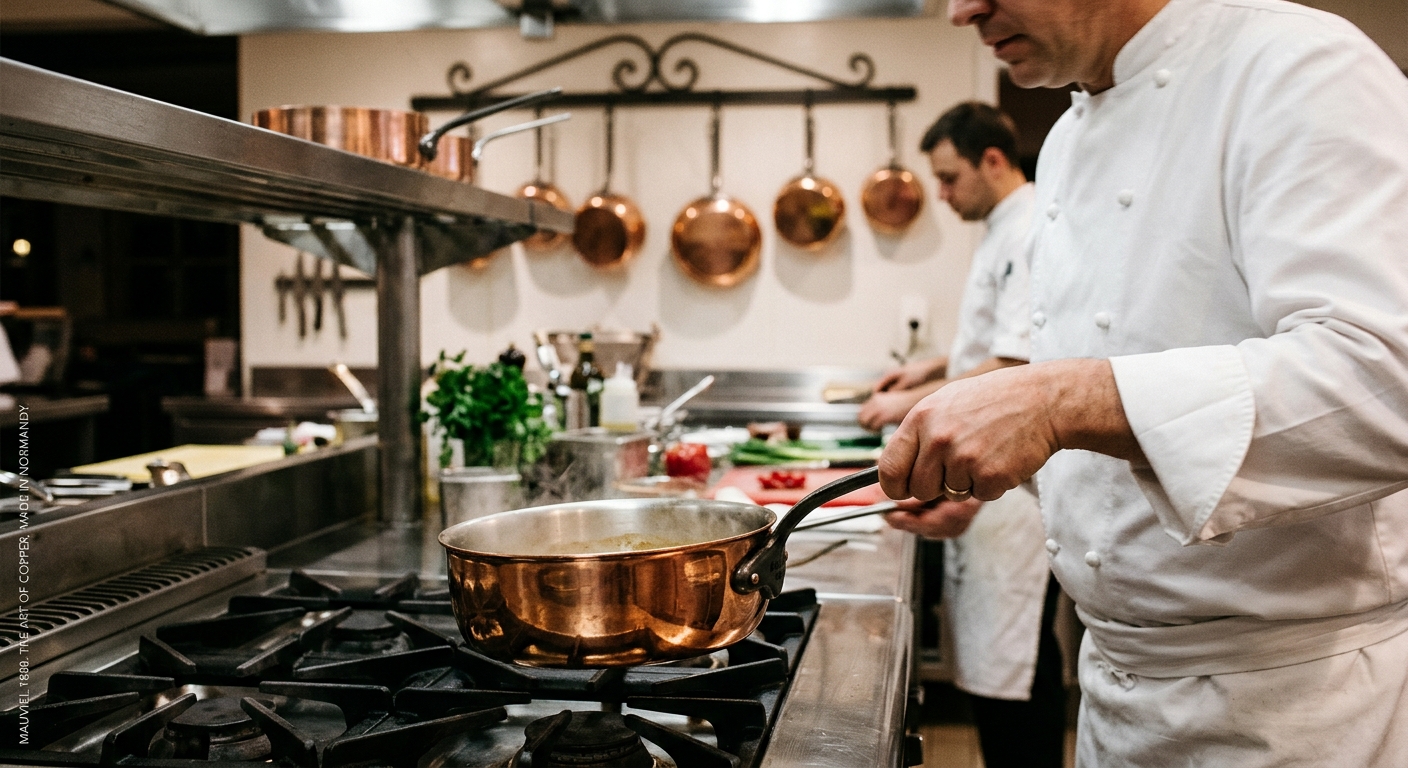
Mauviel has been hand-hammering copper in Villedieu-les-Poêles, Normandy since 1830, and the heat performance is not marketing fluff. Cooks who work with it regularly describe temperature response measured in seconds, not minutes, which matters enormously if you make sauces, candy, or anything else where a 30-second delay ruins the dish. That’s the case for buying it. The case for reading further before you do: copper enthusiast communities have spent the last few years debating whether Mauviel’s current lineup gives you as much actual copper for your money as it used to.
This Mauviel 1830 review pulls together what shows up consistently across cooking forums, YouTube reviews, competitor comparison tests, and the brand’s own care documentation, so you know exactly what you’re getting into before you spend real money on a pan.
What Is Mauviel 1830?
Mauviel is a French cookware manufacturer that has been making copper pots and pans in the same Normandy town for nearly 200 years, and it’s the cookware brand most professional kitchens picture when they hear “copper.” The current catalog spans tin-lined and stainless-lined copper (the M’Heritage series), 5-ply stainless steel (M’Cook, M’Elite, M’Urban), and carbon steel (M’Steel). Individual pieces run from around $125 for smaller items to $500 or more for a large sauté pan, and full sets land between $600 and $3,000, with sales (including a newsletter sign-up discount and periodic markdowns of 30 to 40 percent on sets) showing up a few times a year, most reliably around the winter holidays and mid-summer.
Who Is This Actually For?
Mauviel makes the most sense for people who already cook enough to feel the difference between “the pan heats up eventually” and “the pan responds when I touch the dial.” That’s home cooks serious about sauce work, candy making, or precision searing, plus people who genuinely want cookware they’ll hand down rather than replace. If you like the ritual of hand-washing and periodically polishing copper, that’s a plus rather than a chore for you.
It’s not for you if you cook on induction and don’t want to buy a separate induction disk or the pricier M’6 S line, if you want to toss pans in the dishwasher, or if you want a nonstick surface for eggs. It’s also not the right pick if you’re budget-conscious: as several reviewers note, dollar for dollar there are copper brands that put more actual copper in your hands for the same money (more on that below).
What Real Users Love About It
The heat responsiveness comes up constantly, and not in vague terms. Reviewers testing the M’Heritage M250C line against All-Clad and Falk describe it browning toast more evenly and slightly darker in side-by-side heat tests, and cooks who make caramel or reduction sauces specifically call out how quickly the pan lets them pull food off heat before it scorches, something a thick aluminum or stainless pan can’t match. One detail that keeps showing up from people who’ve actually cooked in these pans day to day: the interior walls slope gradually into the base rather than meeting at a sharp corner, so food doesn’t get trapped and burnt in the corners the way it can in straighter-walled pans like Falk’s.
On the stainless side, the M’Cook and M’Elite lines get compared favorably to All-Clad D3 and D5 by people who’ve owned both, with several noting the heating performance is close enough that the deciding factor ends up being look and handle style rather than cooking results. A verified buyer reviewing the carbon steel M’Steel line called it “durable and well-made” after regular use, and the aesthetic praise is close to universal: the hammered and polished finishes photograph well and hold up as heirloom pieces, which is part of why this cookware shows up so often in wedding registries.
The lifetime warranty against manufacturing defects also earns real goodwill, since a lot of premium cookware brands (Matfer Bourgeat among them) only offer one year.
What to Know Before You Buy
Here’s what to actually watch for. The tin-lined M’Heritage pans (the classic Mauviel look) have a hard ceiling: tin starts to blister around 460°F, so broiling or high-heat oven finishing is off the table, and the lining will eventually wear thin enough to need professional retinning, typically every 10 to 20 years depending on use. Mauviel’s own FAQ classifies retinning as routine maintenance, not a warranty-covered defect, so budget for that cost down the line if you go tin-lined. Testers have also found the tin surface is genuinely not nonstick; one review noted eggs stuck hard enough without oil that the pan needed an overnight soak to clean.
Second, none of the classic copper lines work on induction cooktops without an added magnetic interface disk, and that disk works but it dulls some of the responsiveness that’s the whole point of buying copper in the first place. Only the newer M’6 S line is natively induction-compatible, and it costs more.
Third, and this is the one that’s generated real debate in copper cookware circles: Mauviel discontinued its 2.5mm M’250 line (2.3mm of actual copper) in favor of the M’200 (roughly 1.8mm of copper), and priced the newer, thinner pans at or above what the heavier ones used to cost. Enthusiast site Vintage French Copper, which reviews and restores copper cookware for a living, called this “flat-out disingenuous” repositioning, arguing that 2mm copper was historically sold as lighter table-service weight, not professional weight, and that “dollar for dollar, the M’200 isn’t worth the price” compared to what came before. It’s a fair thing to know going in if you’re buying based on Mauviel’s old reputation for exceptionally thick copper. On a more minor note, the polished copper exterior shows fingerprints and smudges quickly and will develop a brown patina between cleanings, which some owners enjoy and others find is one more chore.
How It Compares to Falk, De Buyer, and All-Clad
Falk is the comparison that comes up most in cookware forums, and it’s a close call. Falk’s copper runs a standard 2.3mm across its line (thicker than Mauviel’s current M’200), and its brushed exterior hides scratches better long-term than Mauviel’s polished finish. Falk also builds in a rolled lip for controlled pouring that reviewers note Mauviel’s M250C lacks. Where Mauviel edges ahead: its stainless steel handles conduct less heat than Falk’s cast iron in some configurations, and in at least one direct browning test, the Mauviel came out slightly more even. Neither one wins across the board; it genuinely comes down to whether you prioritize thickness and pour control (Falk) or handle comfort and that classic Mauviel silhouette.
De Buyer plays a different game entirely, focusing on carbon steel rather than copper, and it wins clearly on value: one cost-per-year breakdown put a Mauviel M’Heritage pan at roughly $12.40 a year over its useful life versus about $4.33 a year for a De Buyer Mineral B Pro pan. If your priority is daily-use durability on a budget, De Buyer is the more honest recommendation. Against All-Clad, Mauviel’s stainless M’Cook line performs close to identically, so that comparison mostly comes down to price and design preference rather than performance.
Is It Worth the Price?
Yes, but with a specific buyer in mind. If you cook enough to actually benefit from copper’s speed of temperature response, and you’re buying with the intention of owning these pans for decades (retinning cost included), the price holds up. Where it stops being worth it: if you’re comparing the current M’200 line against what Mauviel used to sell as its flagship weight, or if you’re induction-only and would need to add a disk or upsize your budget for the M’6 S line. Buy during a sale if you can; the 30 to 40 percent set discounts that show up seasonally make the math noticeably better, and the newsletter discount is worth grabbing even on a single pan.
Our Verdict
Mauviel earns its reputation on heat performance and craftsmanship, and the lifetime defect warranty is genuinely better than most competitors offer. Buy it if you’re a dedicated home cook or aspiring pro who wants copper’s responsiveness and doesn’t mind hand-washing and eventual retinning costs. Skip it if you’re on induction without a plan to buy the M’6 S line, want dishwasher-safe cookware, or are shopping specifically for the old M’250 thickness, since Falk or Matfer Bourgeat will get you closer to that spec today.
Frequently Asked Questions
Is Mauviel copper cookware worth the money?
For serious home cooks who want fast, precise heat control and plan to keep the pans long-term, yes. If you’re comparing it purely on price against carbon steel or clad stainless, brands like De Buyer or All-Clad give you more cooking performance per dollar.
Is Mauviel cookware induction compatible?
Only the M’6 S copper line and Mauviel’s stainless steel lines (M’Cook, M’Elite, M’Urban) work on induction without help. The classic tin-lined and M’Heritage copper lines need a separate magnetic interface disk.
Does Mauviel copper cookware need to be retinned?
Yes, tin-lined pieces will eventually need professional retinning, typically every 10 to 20 years depending on use and heat exposure. Mauviel’s warranty treats this as routine maintenance rather than a covered defect, so it’s an out-of-pocket cost to plan for.
Can you put Mauviel copper pans in the oven?
Stainless-lined copper and the fully stainless lines are oven-safe at standard baking temperatures. Tin-lined pieces are the exception: tin starts to blister around 460°F, so skip the broiler with those.
Is Mauviel better than All-Clad?
For stainless cookware, they perform very similarly, close enough that reviewers who’ve owned both call it a wash on cooking results. The real differences are handle design, price, and whether you want copper as an option at all, which All-Clad doesn’t offer.
How is Mauviel different from Falk copper cookware?
Falk’s copper runs slightly thicker as a standard and includes a pouring lip Mauviel’s current line lacks, while Mauviel’s handles run cooler in some setups and its interior shape resists food getting stuck in corners. Both are well-regarded; the choice comes down to personal preference more than one being objectively better.