CURE Hydration Review: A Clean Electrolyte Mix That Works, But Is It Worth the Price?
CURE Hydration does something most electrolyte brands don’t: it explains why its formula works. Founded on the science behind the WHO’s Oral Rehydration Solution, CURE is built around the specific sodium-to-glucose ratio that maximizes water absorption in the small intestine, a mechanism proven in clinical hydration research. For a supplement category full of vague “hydration support” claims, that kind of grounded science is genuinely refreshing. The CURE Hydration review community notices it.
But there’s a real conversation to be had about price and positioning. CURE costs more per packet than most competitors, uses stevia as its sweetener (which has a distinct taste not everyone loves), and sits below brands like LMNT in sodium content for buyers who prioritize high-sodium electrolyte replenishment. Whether it’s worth the premium depends on your use case and how strongly you feel about the formula philosophy behind it.
What Is CURE Hydration?
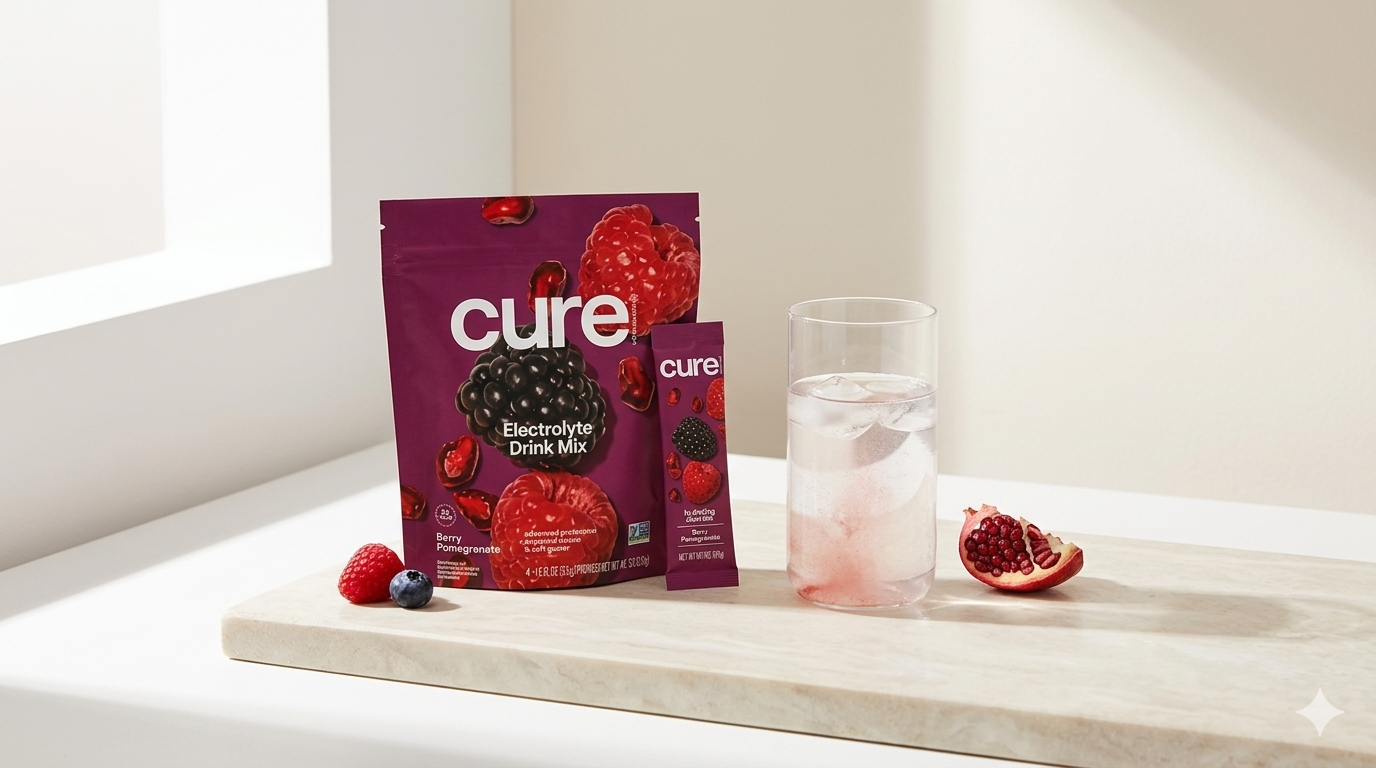
CURE Hydration makes sugar-free electrolyte drink mix packets formulated around the WHO Oral Rehydration Solution (ORS) science. The core formula uses a precise ratio of electrolytes (sodium, potassium, magnesium) combined with a small amount of glucose from organic coconut water to trigger what’s called the sodium-glucose cotransport mechanism, which is the body’s most efficient pathway for absorbing water and electrolytes in the small intestine. Products are sweetened with organic stevia and come in flavors including Apple Ginger, Lemon, Watermelon, Blood Orange, Turmeric Ginger, and others. A 14-packet box retails around $25-$30, with individual packets around $2.50-$3.00 each. CURE is widely available at Target, Whole Foods, CVS, and on Amazon, in addition to their direct-to-consumer site.
Who Is This Actually For?
CURE is an excellent fit for buyers who want clean, science-backed hydration without sugar, artificial sweeteners, or dyes. It’s particularly well suited for: people recovering from illness (the ORS formula was originally developed for clinical rehydration), active individuals who lose moderate amounts of electrolytes through sweat but aren’t doing extreme endurance training, anyone who wants an electrolyte option they can feel good about ingredients-wise, and buyers who appreciate knowing the mechanism behind what they’re drinking.
CURE is less ideal for extreme endurance athletes or heavy sweaters who need higher sodium content (LMNT’s 1,000mg sodium per packet versus CURE’s lower sodium content is a meaningful gap for those users), anyone who strongly dislikes stevia’s aftertaste, or buyers who want the sweetest, most juice-like flavor experience from their electrolyte drink. CURE tastes clean and subtle, not sweet and bold.
What Real Users Love About It
The ingredient transparency is the most consistent point of praise in CURE reviews across Amazon, Reddit’s r/hydration and r/nutrition communities, and the brand’s own verified reviews. Buyers specifically call out the absence of artificial colors, artificial sweeteners (no sucralose or acesulfame potassium), and unnecessary fillers. In a market where it’s genuinely hard to find an electrolyte product without at least one questionable additive, CURE’s clean label earns real loyalty.
The Apple Ginger flavor is particularly praised, appearing as the fan favorite in more review threads than any other flavor. Users describe it as refreshingly different from the typical sweet citrus electrolyte taste, with a slightly spiced, complex profile that doesn’t taste medicinal or artificial. The Turmeric Ginger also earns fans among buyers who are already turmeric enthusiasts.
The WHO ORS science resonates with buyers who’ve done their research. Multiple Amazon and Reddit reviewers specifically mention that they started using CURE during or after illness and found it genuinely effective for rehydration when plain water wasn’t cutting it. One pattern in r/nursing and r/medicine adjacent discussions is that healthcare workers and medically-informed buyers gravitate to CURE precisely because of the ORS formula connection.
What to Know Before You Buy
Stevia is a real consideration if you’re sensitive to its taste. CURE uses organic stevia leaf extract, and the brand’s products have a mild sweetness with a slight stevia aftertaste that is noticeable to many people, particularly in the lighter flavors. If you’re a fan of stevia this won’t bother you, but if you find stevia’s bitter undertone off-putting, it will likely affect your experience with CURE regardless of flavor choice. The heavier flavors (Apple Ginger, Turmeric Ginger) tend to mask the stevia taste better than milder ones.
Sodium content is lower than some competing brands. CURE’s sodium level is appropriate for general daily hydration and moderate activity, but athletes doing long endurance sessions, hot-weather workouts, or activities where significant sodium loss through sweat is expected may want a higher-sodium option. LMNT (1,000mg sodium per packet) is specifically designed for that high-sodium use case. CURE and LMNT aren’t really competing for the same buyer despite being in the same category.
The price per packet is higher than Liquid IV and comparable to or slightly above LMNT, which makes it one of the more expensive electrolyte options on the market. For occasional use (travel, illness recovery, post-workout), the price is easy to justify. For multiple packets per day as a daily habit, the monthly cost adds up. CURE does offer a subscription discount and bulk pricing, which improves the economics somewhat.
How It Compares to Top Competitors
Against Liquid IV, CURE wins clearly on ingredient cleanliness. Liquid IV uses added sugar as part of its formula (which does serve a functional role in the transport mechanism, just as CURE’s coconut water glucose does, but at much higher amounts), and the products have an intensely sweet profile that many users find cloying after regular use. CURE’s formula is more elegant, less sweet, and built for buyers who prioritize clean ingredients over big sweet flavor.
Against LMNT, CURE serves a different need. LMNT is optimized for high-sodium electrolyte replacement for athletes and people on ketogenic or low-carb diets where sodium needs are elevated. CURE is optimized for general clinical hydration science with a clean ingredient profile. Neither is objectively better; they’re designed for different users.
Against Nuun, which also uses effervescent tablets and a lower-sodium formula, CURE is comparable in approach but different in format and flavor profile. Nuun has a wider retail footprint and a slightly lower price point. For buyers who like tablets over powder packets, Nuun is a natural comparison. For buyers who care specifically about the ORS formula science, CURE has a more grounded technical claim.
Is It Worth the Price?
For buyers who care about clean ingredients, want the ORS formula science behind their hydration product, and are okay with stevia as a sweetener, yes. CURE is one of the most credible clean-label electrolyte products on the market and the wide retail availability at Target and Whole Foods means you can try it before committing to a bulk order online.
For buyers who primarily want the cheapest effective electrolyte product, or who need high-sodium replenishment for endurance athletics, there are better-value alternatives. But if clean ingredients and a solid scientific foundation matter to you, CURE’s price premium is meaningful.
Our Verdict
CURE Hydration is a well-formulated, clean-label electrolyte mix with a legitimate science foundation and genuinely good flavors. It’s the right choice for health-conscious buyers who want hydration support without sugar or artificial additives, and it earns its premium over drugstore electrolyte powders. Know the stevia situation before you buy, check if you need more sodium for your activity level, and pick up a box at Target first if you want to try before committing to a subscription.
Frequently Asked Questions
What is the WHO Oral Rehydration Solution and why does CURE use it?
The WHO developed the Oral Rehydration Solution in the 1970s as a low-cost, clinically effective treatment for dehydration. The key insight is that sodium and glucose absorbed together in the small intestine trigger a cotransport mechanism that dramatically accelerates water absorption compared to drinking plain water. CURE’s formula is built around this mechanism, using the electrolytes and a small amount of glucose from coconut water to activate the same pathway. It’s one of the more scientifically grounded claims in the electrolyte supplement space.
Does CURE Hydration have sugar?
CURE contains a small amount of naturally occurring sugar from organic coconut water, which is part of the ORS formula mechanism. It does not contain added sugar and is sweetened with organic stevia. The carbohydrate content per packet is minimal, typically around 4-5 grams.
Is CURE Hydration better than Liquid IV?
It depends on your priorities. CURE has a cleaner ingredient profile (no added sugar, no artificial colors or sweeteners) and a less sweet flavor. Liquid IV uses more sugar in its formula and has a much sweeter taste that many users prefer initially but find cloying over time. For clean-label priorities, CURE is the stronger choice. For buyers who want maximum sweetness, Liquid IV is a better fit.
Where can I buy CURE Hydration?
CURE is widely available at Target, Whole Foods Market, CVS, and Amazon. You can also order directly from their website with subscription options available for a discount. The broad retail availability is one of CURE’s genuine advantages over competitors that are direct-to-consumer only.
Is CURE Hydration good for hangovers?
It comes up in reviews and social media posts, and the answer is: probably somewhat helpful. Alcohol-related dehydration involves electrolyte loss as well as water loss, and the ORS formula is designed to replace both efficiently. CURE is a reasonable choice for hangover hydration for buyers who want a clean-ingredient option. That said, LMNT’s higher sodium content may be more effective for severe hydration deficit situations.